Quick Results
2.44 Days average time to first redemption
66% of members actively engaged in the first 3 months
65% of members have already earned enough points for at least one reward
25%+ of members engaged twice or more in the first 30 days
About Barouche
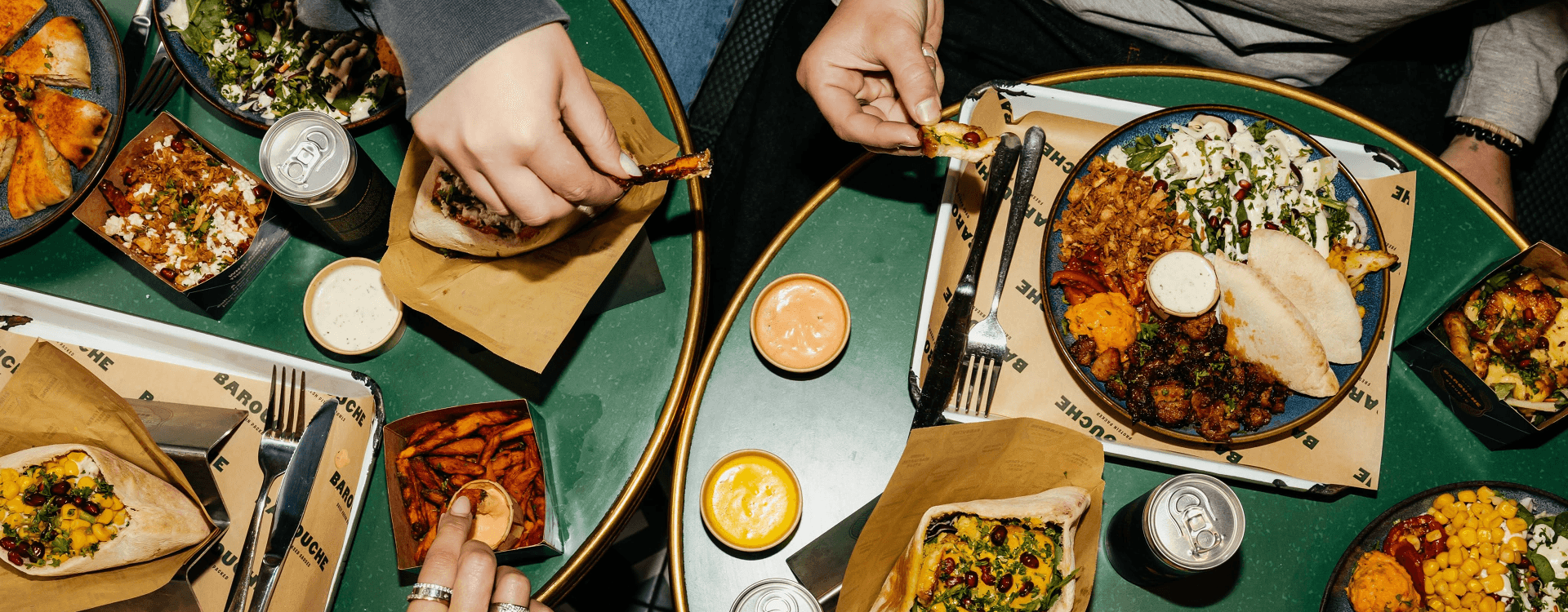
Barouche is a Belgian fast-casual restaurant brand built around Mediterranean street food: fresh pitas, bowls, and sides made from quality ingredients in a fast, informal setting. With multiple locations across Belgium, a dedicated food truck, and a franchise model supporting further growth, Barouche has built its reputation on proving that fast food and fresh food don't have to be mutually exclusive. The brand serves dine-in, takeaway, and online orders, and has developed a loyal following of regulars who keep coming back for the same satisfying combination of bold Mediterranean flavors and honest ingredients.
The Challenge
Barouche operates in a competitive fast-casual market where the decision of where to eat lunch or dinner is made quickly, often within seconds, and where proximity and habit drive a significant share of visits. Building a loyalty program that could meaningfully influence that decision, giving customers a reason to walk past a competitor and choose Barouche instead, required something that worked without friction and delivered value fast enough to form a habit before the novelty of a new program wore off.
For a brand serving customers across dine-in, takeaway, and online channels simultaneously, the program also needed to work consistently regardless of how a customer chose to order, with points earned automatically every time without any manual steps that could be forgotten or skipped.
The Turning Point
The Barouche team recognized that their regulars, the customers who came in for a pita two or three times a week, were the engine of the business. The goal was to build a program that made those regulars feel genuinely rewarded for their habit, and that converted more casual visitors into the kind of frequent buyers who thought of Barouche first whenever they needed a fast, fresh meal. Speed of reward was central to the thinking: a program where customers had to wait months to earn anything meaningful would lose momentum before it had a chance to form a habit.
Why They Chose Leat
Barouche chose Leat to power the Barouche Rewards program because it could support a high-velocity points structure, 100 Pita Points per euro spent — across dine-in, takeaway, and online ordering from a single account, without requiring a physical card or a dedicated app. The sign-up flow was kept deliberately minimal: a name and an email address, nothing more, with points starting from the very first purchase and a free drink credited immediately on joining to give new members an instant reason to engage.
The Strategy
Step 1: Making the First Reward Feel Close from Day One
Barouche launched the Rewards program with a structure designed to get customers to their first redemption as quickly as possible. At 100 Pita Points per euro, a customer spending €10 on a meal earns 1,000 points immediately. A free soft drink unlocks at 5,000 points, meaning five visits at an average spend of €10 is all it takes to earn the first reward. Combined with a free drink on sign-up, Barouche gave new members an immediate taste of the program's value before they'd spent a single cent, lowering the psychological distance between joining and redeeming to almost nothing.
Step 2: Building a Three-Reward Catalog Around the Menu
Rather than offering abstract discounts, Barouche anchored every reward directly to its own menu: a free soft drink at 5,000 points, crispy sweet potato fries at 6,000, and a full free pita at 10,000. Each reward is something a regular customer would order anyway, making redemption feel like a natural extension of a normal visit rather than a separate, deliberate transaction. The escalating structure also gives members a clear progression: start with a drink, work toward the fries, and keep going for the pita.
Step 3: Removing Every Possible Barrier to Participation
Barouche built the program around three principles stated explicitly on the loyalty page: free to join, no card needed, and points that never expire. Each one removes a specific objection that keeps customers from bothering to sign up or stay engaged. No card means nothing to lose or forget. No expiry means no pressure to redeem before a deadline. Free membership means no hesitation. Together, these design decisions created a program with no real reason not to join and no real reason to stop participating once enrolled.
The Results
In just the first three months since launch, Barouche Rewards has already driven exceptional early engagement.
2.44 days average time to first redemption from sign-up, the fastest time-to-redemption in Leat's hospitality customer base
66% of all loyalty members actively engaged in the first three months
65% of customers have already earned enough points for at least one reward
25% of customers engaged with the program twice or more within just the first 30 days
What makes these figures particularly striking is the timeframe. This isn't a program that has had years to build momentum, these results come from the first 90 days. A 2.44-day average time to first redemption tells you the program is doing exactly what it was designed to do: getting customers from sign-up to first reward fast enough to establish a habit before the initial enthusiasm of joining has had a chance to fade.
Key Takeaways
The fastest path to a loyal customer is the fastest path to a first redemption.
Barouche's 2.44-day average to first redemption is the direct result of a program engineered for speed: high points per euro, low redemption thresholds, and a free welcome drink that gets members earning before they've even placed their first order. In fast-casual dining, where habits form quickly or not at all, getting that first redemption moment right is everything.
Early engagement data matters as much as long-term data.
A 25% repeat engagement rate in the first 30 days and 65% of members already sitting on enough points for a reward inside the same amount of time are early signals that the program is building a sustainable engagement habit rather than a sign-up spike that fades. The quality of early adoption often predicts the health of a program long before the long-term numbers are available.
Removing friction isn't just good for your loyalty experience; it's a retention strategy.
No card, no expiry, and a one-minute sign-up aren't just design choices. Each one is a specific answer to a specific reason customers abandon loyalty programs. Barouche's early results suggest that stripping the program down to its essentials, and removing every barrier between a customer and their first reward, is the most direct route to the kind of participation rates that actually move the business.