About Burgermeister
Burgermeister began with one of the most distinctive origin stories in fast food.
Its founder recognized the potential of a disused, heritage-protected public toilet beneath the elevated subway tracks at Schlesisches Tor in Berlin. After years of working to secure and restore the site, the first Burgermeister restaurant opened there in 2006.
Customers began lining up almost immediately. What started in one small Kreuzberg location has since grown into a restaurant group with more than 30 stores and further expansion planned across Europe.
“The first Burgermeister was built out of an old toilet house at Schlesisches Tor. It became iconic, and people queued for the quality of the burgers,” explains Abraham, Head of Marketing at Burgermeister.
Despite that growth, Burgermeister remains focused on the same proposition: straightforward, high-quality burgers and a customer experience worth returning for.
The Challenge
Burgermeister had built a passionate following around its food, locations, and unmistakable identity.
As the restaurant group expanded, recognizing and rewarding regular customers consistently became more difficult. A brand that began with a strong local following needed a way to maintain that connection across more stores and customer touchpoints.
Burgermeister also wanted to understand its customers better. The team needed greater visibility into what people bought, what interested them, and how their relationship with the brand developed over time.
The loyalty experience could not exist in only one channel. It needed to work through the POS, self-service ordering terminals, digital wallet, and native app without adding friction to the ordering process.
The Turning Point
Burgermeister decided to create a loyalty program that could reward customers while giving the team a clearer understanding of their behavior.
“We decided to work with Leat because we wanted to do the best for our customers, understand what they like, and find the right ways to reward them.”
The program had to remain as direct as the brand itself. Customers should understand how they earn points, what those points unlock, and why progressing to the next tier matters.
Burgermeister also wanted ordering and loyalty to form one customer journey. Members should be able to identify themselves, place an order, earn points, and access rewards without moving between disconnected experiences.
Why They Chose Leat
Burgermeister chose Leat because it could support one connected loyalty program across the brand’s stores and digital touchpoints.
The implementation took place step by step. Burgermeister first introduced the Burger Card through a digital wallet pass, then integrated loyalty into its native ordering app.
“We integrated Leat step by step, starting with the loyalty program in the wallet and then adding it to our app. In the app, we combine loyalty and ordering so our customers have the best possible journey.”
The program now works through Burgermeister’s POS, self-service terminals, wallet pass, and app. This allows customers to access the same membership and rewards through the channels they already use to order.
Leat also gives Burgermeister the data needed to understand customer behavior and make more informed marketing decisions.
The Strategy
Step 1: Making loyalty available wherever customers order
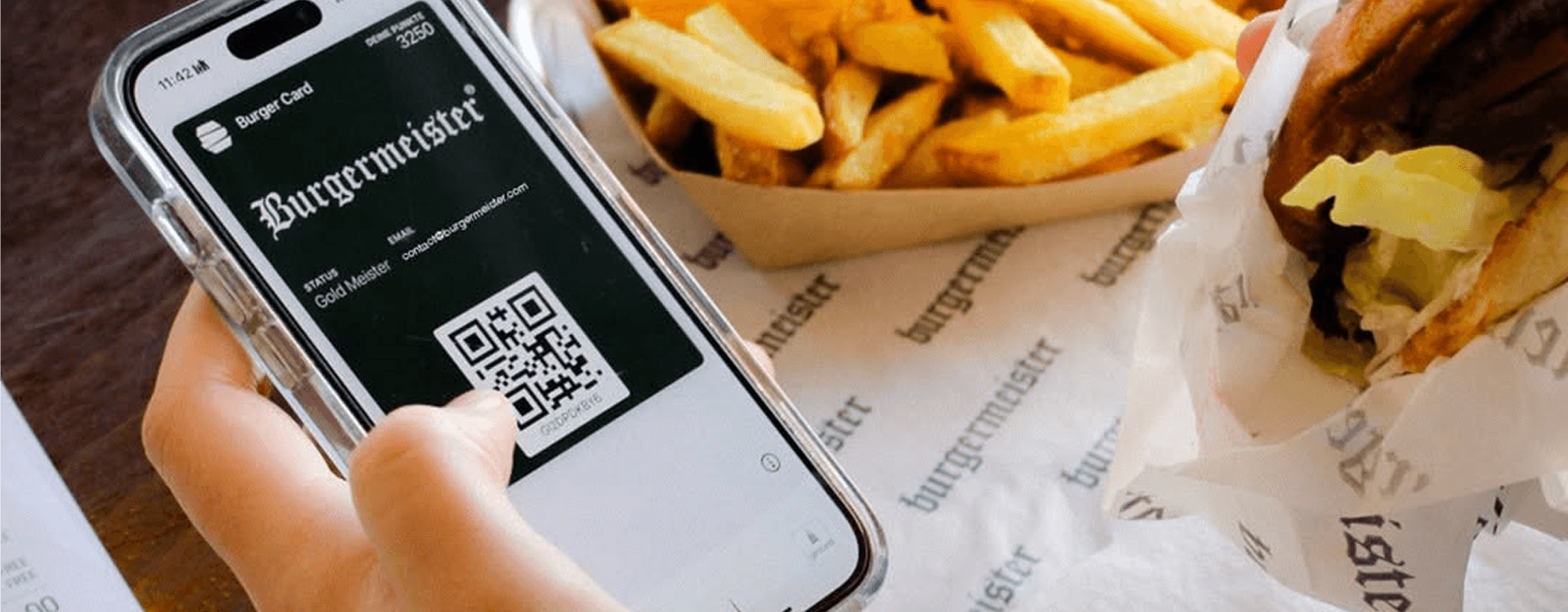
Customers can join the Burger Card through the website or by scanning a QR code from their receipt. They can then add the card to their smartphone wallet or access the program through the Burgermeister app.
At the restaurant, members can identify themselves through the POS or a self-service terminal as part of the usual ordering process.
“For us, it is important that the loyalty program works at every touchpoint. We have it at the POS, at the terminal, and in our native app.”
This keeps loyalty inside the customer’s existing journey rather than requiring a separate card, platform, or process.
Step 2: Combining loyalty and ordering in one app
Burgermeister’s native app brings ordering and loyalty together.
Members can place an order while accessing the same account, point balance, tier status, and available rewards. This creates a more consistent experience than asking customers to switch between separate ordering and loyalty platforms.
It also connects more of the customer journey to one profile, helping Burgermeister understand how members order and engage over time.
Step 3: Rewarding loyalty with meaningful benefits
The Burger Card includes Bronze, Silver, Gold, and Platinum membership levels. Higher tiers provide improved earning rates and additional benefits for Burgermeister’s most committed customers.
Tier upgrades are marked with food rewards, while Platinum members receive an ongoing discount. This ensures that moving to a new level changes the member experience rather than simply changing the name of their tier.
The rewards catalog remains focused on Burgermeister’s menu. Members can redeem points for products including fries, shakes, cheeseburgers, desserts, and signature burgers.
By centering rewards on the food, every redemption reinforces the main reason customers choose Burgermeister.
Step 4: Using loyalty data to guide marketing
Leat gives Burgermeister insight into what members buy, what they are interested in, and how long they continue engaging with the brand.
“Leat makes it easier to interact with our customers, see what they buy, understand what they are interested in, and see how long they engage with us.”
That information gives the marketing team a stronger basis for personalization. Instead of relying only on broad assumptions, Burgermeister can use customer behavior to decide which rewards and communications are most relevant.
“With the loyalty program, we have gained much more data to base our decisions on.”

The Impact
Leat has helped Burgermeister turn loyalty into a connected part of the customer experience rather than a separate program.
Customers can access their membership and rewards through the wallet, app, POS, and ordering terminals. Loyalty remains available wherever they interact with the brand, while ordering and membership come together inside the native app.
For the marketing team, the program provides a clearer view of what customers purchase, what interests them, and how their engagement develops. This gives Burgermeister more useful information for planning rewards, personalizing communication, and making decisions.
Abraham has also seen an improvement in retention since Burgermeister connected its loyalty experience:
“We are seeing much better retention than before.”
Key Takeaways
Loyalty should follow the complete ordering journey
Burgermeister makes the program available through its POS, self-service terminals, digital wallet, and native app. Customers can use loyalty through the same touchpoints they already use to order.
Ordering and loyalty work better as one experience
Combining both in the Burgermeister app removes unnecessary steps and makes membership a natural part of placing an order.
A phased rollout can simplify implementation
Burgermeister began with the digital wallet before integrating Leat into its native app and other ordering touchpoints. This allowed the loyalty experience to expand in manageable stages.
Customer data makes loyalty more useful to the business
Burgermeister can see what members buy, what interests them, and how long they remain engaged. These insights give the team a stronger basis for personalization and marketing decisions.
Product-led rewards reinforce the reason customers joined
Burgermeister rewards members with the food they already visit for. Each redemption becomes another product experience instead of a generic discount detached from the brand.
Connected loyalty supports customer retention
By making the program consistent across touchpoints and using its data to understand customers better, Burgermeister has created a stronger foundation for keeping them engaged over time.