About Ozone Coffee
Ozone Coffee began in New Zealand more than 25 years ago. The business expanded to the UK when its current CEO and her husband recognized an opportunity within the country’s specialty coffee market, opening a roastery and café at the brand’s flagship Shoreditch location.
Today, Ozone operates four cafés in the UK alongside a direct-to-consumer e-commerce business selling coffee, subscriptions, and brewing equipment.
Its cafés also play a wider role in the customer journey. They give people a place to discover Ozone, experience the brand, and build a relationship that can continue online.
“Ozone is originally from New Zealand. It was founded 26 years ago, and around 13 years ago it was brought to the UK. We now operate four cafés here, as well as selling direct to consumers online.”
The Challenge
Ozone wanted to take an omnichannel approach to its marketing, but its existing loyalty setup reflected only one part of the business.
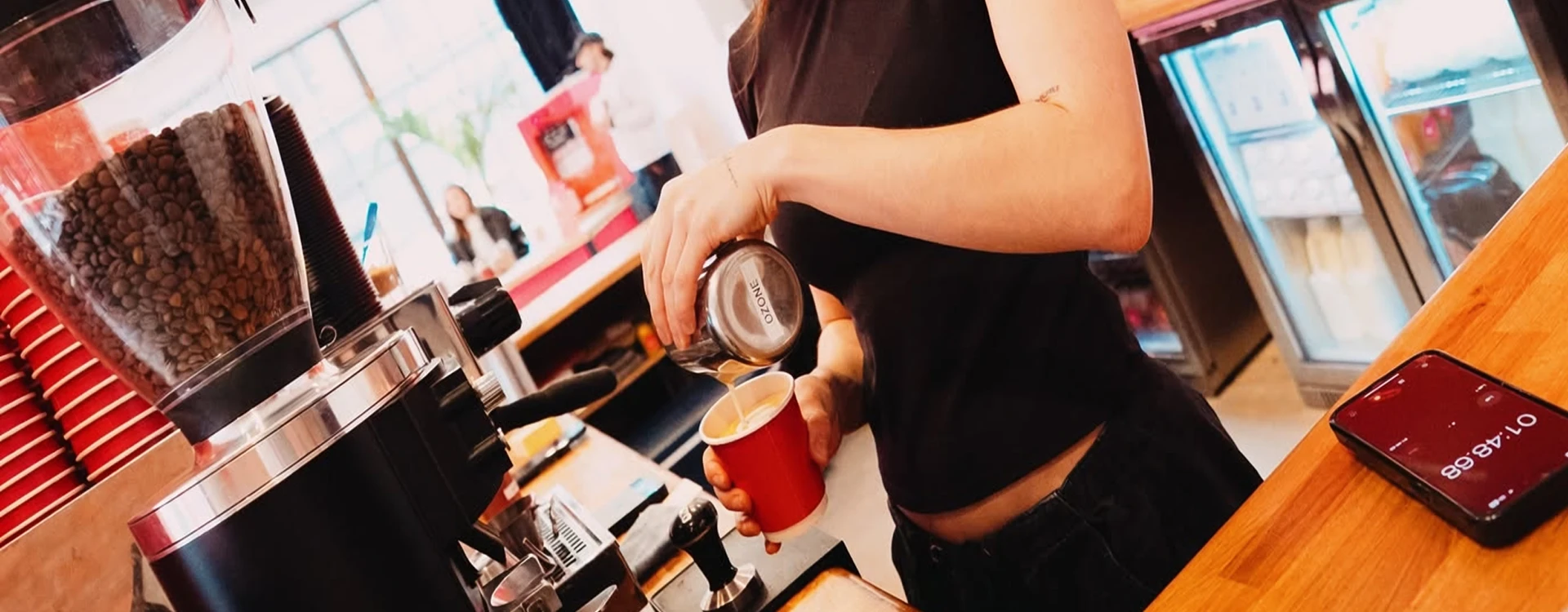
In-store customers used a simple digital stamp card that did not collect meaningful customer data. Online customers earned rewards through a separate system. The two experiences were not connected, even when the same person bought coffee from a café and later ordered beans online.
“Our loyalty program before Leat was one-dimensional. We had a very simple stamp app in-store that didn’t collect any data.”
This made it difficult for Ozone to recognize customers across channels or give café visitors access to the same kinds of benefits available online. The team was also missing the customer insight needed to compare behaviors, understand how the channels influenced one another, and build more relevant marketing campaigns.
The Turning Point
Ozone had been searching for a way to connect its physical and digital customer experiences.
The team wanted people visiting a café to earn points and access benefits through the same program as customers ordering through the e-commerce store. That required more than replacing the existing stamp card. Ozone needed a loyalty platform that could connect its customer data, point-of-sale system, online store, and marketing tools.
“We wanted to create an experience where people who visited us in-store could have the same perks as the customers who gained rewards and points online.”
Creating this shared experience would allow loyalty activity from every channel to contribute to one customer relationship, rather than leaving Ozone with separate views of its café and online audiences.
Why They Chose Leat
Ozone chose Leat because it could connect with the systems already at the center of its business.
Leat integrates with Shopify for e-commerce, Lightspeed for café transactions, and Klaviyo for customer communication. These connections allow loyalty data to move across Ozone’s technology stack instead of remaining isolated inside separate platforms.
“Because Leat plugs into Shopify, Klaviyo, and Lightspeed, it covers the full technology stack for us. That makes the whole thing much easier.”
Leat also gave Ozone an opportunity to begin collecting customer data through its in-store loyalty experience. Rather than recording only another anonymous stamp, the brand could start building a connected understanding of how members engaged across cafés and online.
The Strategy
Step 1: Creating one loyalty program across every channel
Ozone brought its café and e-commerce loyalty experiences together through the Ozone Rewards Club.
In cafés, Leat connects with Lightspeed so customers can be recognized and earn points as part of the checkout process. Online, its connection with Shopify keeps purchases and loyalty activity tied to the same member profile.
This gives customers one loyalty relationship with Ozone. Points earned through one channel remain part of the same balance and can contribute to rewards used elsewhere in the business.
Step 2: Replacing anonymous stamps with useful customer data
Ozone’s previous stamp app could record progress toward a reward, but it did not help the business understand the customer behind that activity.
With Leat, in-store loyalty interactions can contribute to the same customer record as online purchases and marketing engagement. Ozone can begin comparing how customers behave across its cafés and e-commerce store rather than viewing each channel separately.
“For the first time, we’re collecting data from one loyalty system. I’m excited to see how the different areas compare and what conclusions and marketing campaigns we can create as a result.”
Step 3: Making rewards relevant to different customers
Ozone designed its reward catalog to support both café visitors and online customers.
Members can work toward benefits such as free drinks, free sides, shipping rewards, and percentage-based incentives. The range gives café regulars and customers ordering coffee at home relevant reasons to participate in the same program.
New members also receive points for creating an account, giving them an immediate start toward their first reward. From there, they earn points as they spend across participating channels.
Step 4: Connecting loyalty with customer communication
The Klaviyo integration allows Ozone to use loyalty data within its customer communication.
Instead of treating email and loyalty as separate activities, the team can use customer profiles, balances, rewards, and behavior to create more relevant campaigns. As Ozone learns more about the relationship between café visits and online purchases, those insights can inform how different customer groups are engaged.
This turns loyalty data into something the marketing team can use, rather than simply a record of points earned and redeemed.
The Impact
Leat has given Ozone the foundation for one connected approach to loyalty across its cafés and e-commerce business.
The brand can now:
Give café and online customers access to the same loyalty program.
Connect activity from Shopify, Lightspeed, and Klaviyo.
Replace an anonymous in-store stamp app with identifiable customer data.
Maintain one customer profile and points balance across channels.
Compare engagement between café and online customers.
Use loyalty data to create more relevant customer groups and campaigns.
Manage the program without maintaining separate systems for each channel.
The value of this setup is not limited to the rewards customers receive. It gives Ozone a clearer view of how people engage with the brand and a practical way to apply that understanding across its marketing.
“Leat is definitely going to be a game changer for Ozone.”
Key Takeaways
Omnichannel loyalty starts with one customer relationship
Ozone’s customers do not necessarily think of a café visit and an online order as separate relationships. Connecting both channels allows the loyalty experience to reflect how people actually engage with the brand.
In-store loyalty should create insight, not just record stamps
A stamp card can encourage another visit, but it reveals little about the customer using it. Identified loyalty activity gives Ozone a stronger foundation for understanding its café audience and connecting it with online behavior.
Integrations make connected loyalty practical
Connecting Leat with Shopify, Lightspeed, and Klaviyo allows Ozone to use its existing technology stack rather than adding another isolated system. Loyalty becomes part of checkout, e-commerce, and customer communication.
One program can still serve different customer needs
A café regular and an online subscriber may value different benefits. A varied reward catalog allows Ozone to serve both through the same underlying program.
Connected data creates new marketing opportunities
Bringing café and online activity together allows Ozone to compare customer behavior, build more useful segments, and develop campaigns based on a more complete view of the relationship.