Quick Results
90,000+ Loyalty Members in the SushiDog Pack
89% of all loyalty members actively participating
68% Repeat participation rate among loyalty members
0% Inactive contacts with redemption potential
About SushiDog
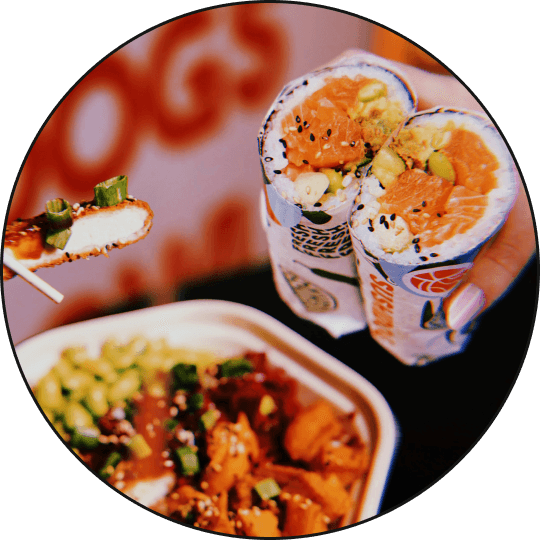
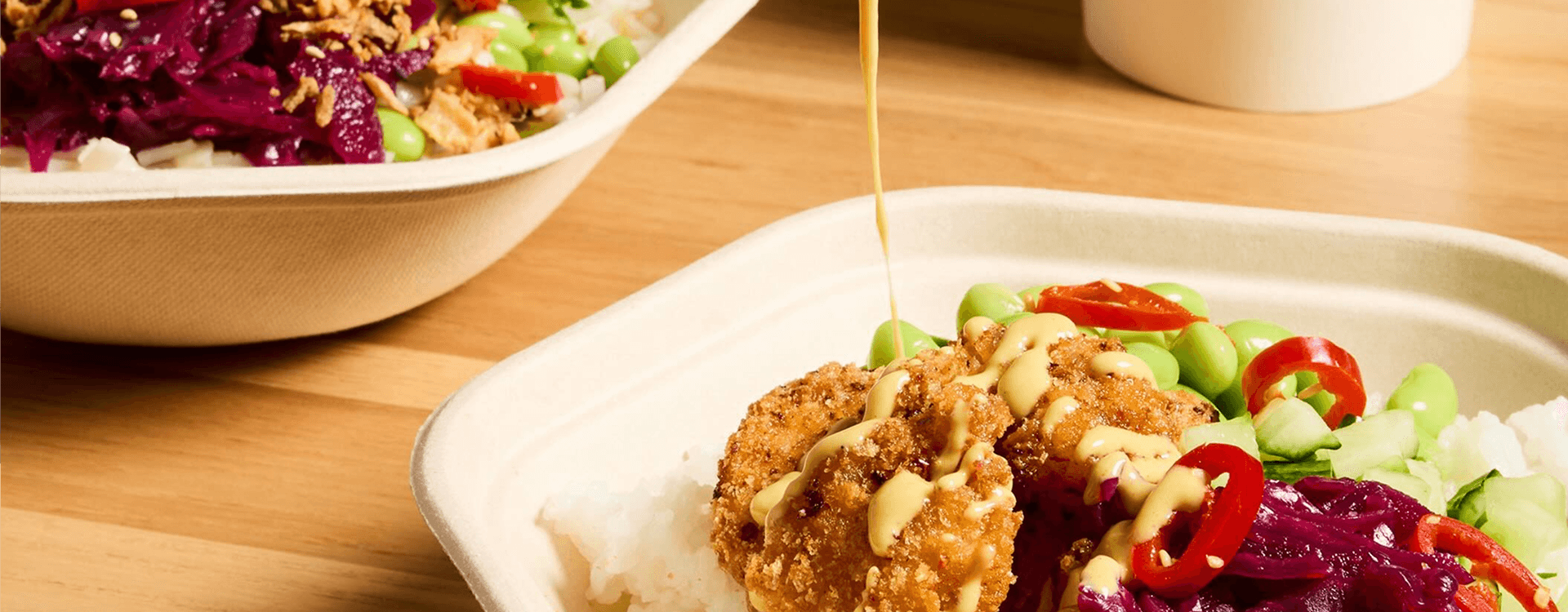
Founded by Greg and Nick in 2018 with a single kiosk at Westfield London, SushiDog has grown into one of London's most recognizable fast-casual sushi brands, with 13 locations across the city, a flagship store on Tottenham Court Road, a Gatwick Airport kiosk, and its first international franchise in Stockholm. The brand is built around freshly made, fully customizable SushiDogs, sushi bowls, and Asian-inspired salads, all prepared in front of the customer and designed to be eaten on the go. Starting from £6.50, SushiDog has built its reputation on delivering a genuinely fresh, satisfying sushi experience without the traditional price tag or the inconvenience of pre-packaged grab-and-go options.

The Challenge
Scaling a fast-casual restaurant brand across 13 locations in one of the world's most competitive food cities is hard enough. Keeping customers loyal to a specific brand when a sushi bowl, a salad wrap, or a hot lunch option is available on virtually every corner in London is harder still. SushiDog had built real momentum through product quality, customization, and a distinct brand identity, but momentum alone doesn't turn a lunchtime visitor into a weekly regular.
Without a structured loyalty program capable of rewarding customers consistently across every location and ordering channel, SushiDog had no reliable mechanism to recognize returning customers, incentivize more frequent visits, or give someone a reason to choose SushiDog on a Tuesday when they hadn't been in since the previous Friday. Each visit was, in effect, its own independent decision.
The Turning Point
As SushiDog scaled across London and secured its first major investment in 2023, the team recognized that building a loyal customer community had to be as much a part of the brand's growth strategy as opening new locations. The brand already had a distinctive identity, a name and personality that customers responded to, and a product designed around speed and freshness. The opportunity was to build a loyalty program that matched that identity just as authentically.
The team wanted something that would reward their most frequent customers in a way that felt genuinely exciting, not just a discount scheme, while also giving casual visitors a reason to come back more often and climb toward better perks over time.
Why They Chose Leat
SushiDog chose Leat to power the SushiDog Pack because it supported the kind of tiered, app-based loyalty program the brand had in mind, one that could work seamlessly across in-store QR scanning and click-and-collect ordering while giving customers a single, unified view of their points and rewards. The app integration was central to the strategy: by making loyalty app-first, SushiDog could deliver a frictionless experience at the till while also building a direct communication channel with its most engaged customers through birthday rewards and referral mechanics.
The Strategy
Step 1: Naming the Program Like a Brand, Not a Feature
SushiDog launched its loyalty program as the SushiDog Pack, with four tiers named Fresh Pup, Pup Star, Top Dog, and Pack Leader, each one a natural extension of the brand's playful, dog-themed identity. This wasn't incidental. By naming every tier in a way that felt like it belonged to SushiDog specifically, the brand made the Pack feel like a genuine community rather than a generic points scheme. Customers don't just accumulate points at SushiDog, they climb the pack, and they know exactly where they stand within it.
Step 2: Using Time-Based Incentives to Drive Visit Frequency
One of the SushiDog Pack's most distinctive features is its use of recurring, time-based double points windows: 2x points every day between 3 and 5pm, and 2x points all day every Friday as part of SushiDog Fridays. These aren't one-off promotional events, they're permanent fixtures of the program, giving members a predictable, reliable reason to visit at specific times. For a fast-casual brand where visit frequency is the primary growth lever, anchoring double points to specific windows creates a habit-forming rhythm that standard discount mechanics simply don't.
Step 3: Rewarding the Most Loyal Members with Things Money Can't Buy
As members climb from Fresh Pup to Pack Leader, the rewards escalate well beyond free food. Top Dog members unlock a monthly 2-for-1 SushiDog, bowl, or salad to bring a friend, while Pack Leader members, the brand's most loyal customers, receive a free SushiDog hoodie, 10% off every visit, and the kind of brand merchandise that turns a regular customer into a walking advocate. Combined with a free side on sign-up, a birthday SushiDog for established members, and a referral program offering 100 points to both parties when a friend joins and orders, the Pack was built to reward engagement at every level of the customer journey.
The Results
The SushiDog Pack has become one of the most actively engaged loyalty communities in UK fast-casual dining.
Over 90,000 loyalty members enrolled in the SushiDog Pack
92% of all loyalty members actively participating, an exceptionally high engagement rate for a program of this scale
59% repeat participation rate among loyalty members, showing more than half of members returning to earn or redeem again
0% inactive contacts with redemption potential, meaning there are no members sitting on enough points to redeem a reward who haven't already done so, a metric that speaks to how well the program has been designed to convert accumulated points into actual visits
That last figure is particularly notable. In most loyalty programs, a meaningful share of members accumulate points they never use, representing both a missed revenue opportunity and a signal that the rewards aren't compelling enough to act on. At SushiDog, that number is zero.
Key Takeaways
A loyalty program's naming and structure can reinforce brand identity at every level.
From Fresh Pup to Pack Leader, every tier of the SushiDog Pack feels like it belongs to the brand. This kind of cohesion makes the program more memorable and more emotionally resonant than a generic points ladder, and gives customers something to identify with, not just accumulate.
Time-based double points windows create habitual visit behavior.
By making 3-5pm and SushiDog Fridays permanent double points fixtures rather than limited-time events, SushiDog gave members a predictable, recurring reason to visit at specific times, turning loyalty mechanics into a driver of visit frequency rather than just a reward for existing behavior.
Zero inactive contacts with redemption potential is the ultimate measure of program health.
Most loyalty programs leak value through members who earn but never redeem. The fact that SushiDog has eliminated this entirely reflects a program designed not just to collect members, but to keep every one of them engaged enough to act.