
For years, the retail industry has been chasing the holy grail of "being everywhere." Brands have scrambled to set up online shops, launch mobile apps, open physical showrooms, and sell on social media. But in this frantic rush to launch new channels, a massive problem emerged: the underlying technologies didn't talk to each other.
The resulting experience is clunky and frustrating. Online orders are disconnected from physical stores, gift cards only work on one channel, and customer support representatives have no idea what a customer did five minutes ago on the website.
To solve this, leading retailers are moving past the chaotic web of disconnected channels. Instead, they are shifting toward a unified commerce strategy. By moving from fragmented software to a single, interconnected engine, businesses are finally bridging the gap between digital and physical, delivering the frictionless encounters that modern shoppers expect.
What is unified commerce?
At its core, unified commerce is the practice of consolidating your entire retail infrastructure - online sales, physical point-of-sale (POS) terminals, mobile apps, customer databases, loyalty programs, and inventory - into a single source of truth.
Instead of running separate backend systems that require complex integrations to sync up, a unified commerce approach puts all of your business operations onto a single, cohesive software engine.
This means that whether a customer is browsing on their phone at midnight, tapping a digital wallet pass at a physical register, or speaking to a support agent, they are interacting with the exact same system in real-time. For the business, this removes the headache of manually reconciling spreadsheets and dealing with laggy data syncs. It gives you a complete, undivided view of your business, allowing you to make informed decisions based on accurate, data-driven insights.
How does unified commerce differ from omnichannel or multichannel commerce?
While "multichannel," "omnichannel," and "unified commerce" might sound like marketing buzzwords for the same concept, the technological differences between them are night and day. In short, unified commerce isn't just connecting channels; it's finding one single source of truth.
Multichannel commerce (The Fragmented Approach)
This is the most basic model. You sell in multiple places—like a Shopify website and a physical brick-and-mortar store—but the channels operate as entirely separate businesses. The online shop and the physical store have their own stock lists, customer databases, and payment processors. They do not talk to each other at all.
Omnichannel commerce (The Connected Approach)
Omnichannel tries to fix the multichannel mess by connecting these separate silos. Brands use software integrations, APIs, and plugins to force the online store and physical store to share data. However, because these are still separate databases trying to sync up, there is almost always a lag. This results in errors like online orders being accepted for out-of-stock items or customer service agents seeing outdated purchase histories.
Unified commerce (The Single Platform Approach)
Unified commerce skips the complicated integrations entirely. Instead of trying to connect separate databases with virtual "duct tape," you use a unified commerce platform. Every single sales channel, inventory log, and customer profile is natively built on the exact same database. There is no syncing required because there is only one database to read from.
By utilizing unified commerce solutions, you move from a complex web of patched-together systems to a clean, unified system that naturally prevents data lag and operational friction.
How unified commerce benefits retailers
Transitioning to this single-engine model provides retailers with game-changing operational benefits, including:
Flawless inventory management
When your digital and physical storefronts draw from the same stock pool, you get absolute clarity on your real-time inventory. You can confidently offer modern pickup options like "Buy Online, Pick Up In Store" (BOPIS) without worrying about selling a product that was bought off a physical shelf five minutes earlier.
A true, 360-degree customer profile
In a fragmented setup, a customer who spends $500 online and $500 in-store looks like two separate, low-value customers. By having a unified database, you see their entire customer journey as a single picture. You know exactly what they buy, how often they visit, and where they prefer to shop.
Massively reduced software costs
Maintaining separate subscriptions for an e-commerce platform, a POS provider, a standalone CRM, and an inventory tracker gets incredibly expensive and hard to manage. Consolidating your stack into a single platform reduces your subscription fees, simplifies your IT overhead, and keeps your team focused on one interface.
Smarter, data-driven decisions
When your sales, inventory, and marketing data live in one place, you can spot trends instantly. You can see which items are selling best on which channels, when stock is running low, and which promotional offers are driving the highest return on investment, allowing you to react with lightning speed.
How unified commerce benefits customers
At the end of the day, shoppers don’t care about your backend database structure—they care about how it feels to buy from you. When a retailer has adopted a unified commerce mindset, the consumer experiences a frictionless journey from discovery to checkout.
A completely seamless experience
Whether they browse on Instagram, order on their phone, or pick up their package at a brick-and-mortar store, the experience remains entirely consistent. Their login details, saved addresses, and payment methods work effortlessly across every single touchpoint.
Trust in product availability
There is nothing worse than driving to a store to buy an item marked "in-stock" online, only to find out the website was updating on a two-hour delay. With real-time inventory tracking, shoppers get exact, reliable stock levels before they make the trip.
Frictionless customer service
If a customer needs to return an online order in-store or asks a support agent about a physical purchase, they don't have to explain their entire backstory. Because the brand’s support team has immediate access to their unified customer profile, the agent can pull up their order history in one click and solve their issue instantly.
Unified rewards and gift cards
Customers expect their loyalty benefits to work everywhere. Under a unified system, they can earn points on their phone, redeem a gift card at a self-service kiosk, and check their membership status on a digital wallet pass without encountering any "online-only" or "in-store-only" roadblocks.
How to implement a unified commerce strategy
Moving your business from a fragmented, multichannel setup to a single source of truth requires an intentional, step-by-step approach. Here is how you can systematically implement a unified commerce framework.
Mapping out online and offline touchpoints
Start by taking a bird’s-eye view of how customers interact with your brand. Write down every single place they can discover, buy, or return your products. This includes your brick-and-mortar storefronts, e-commerce site, social channels, and third-party marketplaces. Understanding these physical and digital paths helps you identify where data is currently getting lost in translation.
Setting your budget
Unified commerce is an investment in your brand's future, so you need to set a realistic budget that accounts for both software migration and physical hardware upgrades. When calculating your costs, factor in the immediate savings you will gain by eliminating redundant software subscriptions, reducing inventory errors, and saving your team hours of manual data reconciliation.
Choosing the right tech stack
The core of your strategy is choosing a unified commerce platform that fits your business. You want an engine that naturally handles your online store, physical POS terminal, and inventory out of the box. Look for robust platforms that natively offer built-in customer relationship management (CRM) and open APIs so you can easily scale your ecosystem as your business grows.
Integrating your various systems
If you aren't completely replacing your existing software, you must ensure your chosen tools are deeply integrated. Your e-commerce checkout, in-store registers, and inventory management systems must talk to each other in real-time. The goal is to phase out any batch-syncing processes (where data only updates once a day) in favor of instant, live data transfers.
Configuring a centralized system for bi-directional data flow & storage
Ensure your central database is configured to both receive and push data across all points of sale simultaneously. When an item is bought at a register, the physical POS must immediately alert your online store to decrease the digital stock count. This continuous, two-way loop is what keeps your inventory and customer records flawless.
Gear your strategy and team toward unified commerce
Software is only as good as the people using it. Train your physical store staff to use the new platform to check online orders, view customer histories, and process multi-channel exchanges. Shift your company's mindset from managing "online vs. offline" sales to managing a single, cohesive brand experience.
Monitor & adapt
Once your unified setup is live, continually monitor your engagement metrics, inventory accuracy, and checkout speeds. Use your unified data dashboards to track customer buying behavior, run A/B tests on your omnichannel checkout options, and adapt your logistics to keep your operations running like clockwork.
How Leat helps businesses to unify their online and offline channels with loyalty
One of the biggest hurdles to a great shopping experience is the divide between online accounts and physical loyalty cards. Many brands struggle to connect a customer's digital web profile with their in-store purchases, leaving their loyalty program fragmented.
Leat bridges this gap by acting as a powerful loyalty layer that plugs directly into your unified commerce stack.
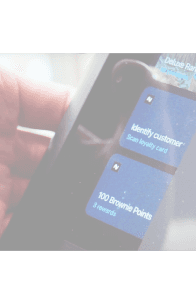
By issuing a highly customized digital wallet pass that lives inside your customer's Apple Wallet or Google Wallet, Leat creates a frictionless link between all your sales channels. When a customer walks into your physical store, they simply tap their wallet pass at the register or kiosk.
Behind the scenes, Leat instantly identifies the customer, pulls up their unified customer profile, and logs the transaction. If that same customer orders online later that night, they use the exact same account, with all their earning points, personalized offers, and loyalty progress.
With Leat, your loyalty program stops being a standalone marketing tool and becomes a core part of your unified strategy, making it incredibly easy to gather data-driven insights, reward your community, and drive repeat visits across every single channel.
Final word
Running separate, disconnected retail channels is a relic of the past. A unified commerce strategy brings your inventory, customer profiles, and loyalty under one roof. By pairing this consolidated engine with Leat, you remove the friction from both your operations and your customer journey, making repeat purchases the natural choice.