– 9 minute read
Discover effective strategies to boost customer engagement, enhance loyalty, and improve satisfaction, driving long-term success and growth for your business.

Cormac O’Sullivan
Author

Customer engagement is often treated as a growth shortcut, measured through clicks, likes, and activity levels. But real engagement goes deeper than surface interactions. It reflects how customers feel about a brand, how willingly they participate across customer journeys, and whether those connections last over time. When done well, customer engagement strengthens customer relationships, supports long-term loyalty, and improves overall customer experiences. When done poorly, it creates noise, fatigue, and misplaced priorities.

What Is Customer Engagement?
Customer engagement refers to the ongoing interactions and emotional connections between a brand and its customers over time. It goes beyond transactions, focusing on how customers respond to products or services, content, customer service, and brand communication in real time. Effective customer engagement helps brands emotionally connect with customers, shape positive customer experiences, and strengthen long-term customer relationships.
However, engagement is not just about frequency. More touchpoints do not automatically mean stronger connections. Poorly executed engagement strategies can overwhelm customers or feel intrusive. True engagement is intentional, customer-based, and rooted in delivering consistent value across every stage of the customer journey.
Customer Engagement vs. Customer Experience
Customer experience refers to how customers perceive every interaction they have with a brand, from discovering products or services to using customer service and support. It is shaped by design, processes, and consistency across customer journeys. Brands largely control the customer experience, which means poor execution, unclear communication, or unmet customer expectations can quickly damage how customers feel. A strong experience builds trust, but on its own, it does not guarantee that customers will stay involved or loyal over the long term.
Customer engagement focuses on how customers respond to those experiences and how actively they choose to interact with the brand over time. Engagement shows up through behaviors like repeat purchases, social media interaction, feedback sharing, and participation in loyalty programs. While experience is something brands create, engagement is something customers give. The challenge is that engagement cannot be forced; it must be earned through relevance, value, and emotional connection.
The Role of Marketing in Customer Engagement
Marketing plays a key role in shaping customer engagement by influencing how and when brands interact with customers. Through content, social media, and personalized experiences, marketing helps guide customers across their journeys and set clear expectations. When done well, it strengthens emotional connections and supports effective customer engagement over the long term.
However, marketing can also weaken engagement when it focuses too heavily on promotions or short-term metrics. Over-automation and excessive messaging often create fatigue rather than value. To truly support customer engagement, marketing must prioritize relevance, timing, and consistency instead of simply increasing touchpoints.
5 Benefits of Successful Customer Engagement
Stronger Emotional Loyalty
Successful customer engagement helps brands move beyond transactional relationships and build emotional loyalty. When customers feel understood, valued, and aligned with a brand’s purpose, they are more likely to stay connected even when competitors offer lower prices.
This emotional connection often develops through personalized experiences, consistent communication, and meaningful brand interactions. However, emotional loyalty cannot be manufactured. If engagement efforts feel forced or overly automated, customers may disengage just as quickly. Brands must focus on authenticity and relevance, not just frequency, to create loyalty that lasts over the long term.
Higher Customer Retention
Engaged customers are more likely to return, making customer retention one of the clearest benefits of effective customer engagement. Ongoing interactions across customer journeys help reinforce trust and familiarity, reducing the likelihood that customers will switch brands.
That said, retention strategies that rely too heavily on discounts or constant incentives can weaken perceived value. Sustainable retention comes from meeting customer expectations consistently, delivering reliable customer service, and ensuring customers feel supported rather than pressured to stay.
Richer Customer Data
Customer engagement naturally generates valuable data, including behavioral insights, preferences, and direct customer feedback. This data allows brands to improve products or services, refine customer engagement strategies, and deliver more personalized experiences.
The risk lies in collecting data without a clear plan for using it. Customers expect brands to act on the information they share. Failing to do so, or using data in ways that feel intrusive, can damage trust and weaken the customer relationship instead of strengthening it.
Shorter Purchase Cycles
When customers are engaged, they tend to move through purchase decisions more quickly. Familiarity with the brand experience, confidence in product value, and previous positive interactions reduce hesitation and friction.
Real-time communication and timely content can further support faster decisions. However, pushing customers too aggressively toward conversion can backfire. Engagement should support decision-making, not rush it. Brands that respect customer pace while remaining present often see more consistent results.
Increased Customer Lifetime Value
Over time, successful customer engagement increases customer lifetime value by encouraging repeat purchases, cross-selling opportunities, and long-term loyalty. Engaged customers are also more likely to advocate for the brand, strengthening connections with customers beyond direct transactions.
The challenge is that lifetime value grows slowly and requires sustained effort. Short-term engagement tactics may deliver quick wins, but long-term value depends on evolving with customer needs, maintaining relevance, and continuously improving the overall customer experience.
What Does Customer Engagement Look Like in Practice?
Customer engagement becomes most visible through customer behavior. It shows up in how customers choose to interact with a brand beyond basic transactions, across channels, touchpoints, and moments that shape the overall brand experience. Below are the most common and meaningful expressions of engagement in practice.
Actively Participating in Loyalty and Rewards Programs
When customers actively participate in loyalty and rewards programs, it signals ongoing commitment rather than one-time interest. Engaged customers redeem rewards, track progress, and adjust their behavior based on program incentives.
This can strengthen emotional loyalty and repeat purchases over the long term. However, loyalty programs lose impact when they feel overly transactional or difficult to understand. Customers disengage quickly if rewards lack relevance or if benefits are delayed too far into the future. Successful programs balance simplicity, personalization, and immediate value.
Showing Up at Brand-Hosted Events, Webinars, and User Conferences
Customers who attend brand-hosted events, webinars, or user conferences demonstrate a deeper level of engagement. These moments create opportunities for real-time interaction, education, and community building.
They also allow brands to humanize their message and strengthen customer relationships. The challenge is relevance. If events feel promotional or disconnected from customer needs, attendance drops, and trust erodes. Brands must design events around customer value, not just visibility, to make participation feel worthwhile.
Using Self-Service Tools and Customer Support Touchpoints
Engaged customers frequently use self-service tools, knowledge bases, and customer support channels to solve problems and optimize their experience. This behavior reflects trust in the brand’s systems and a desire for efficiency.
At the same time, over-reliance on automated support can frustrate customers when issues are complex or emotional. Effective customer engagement combines accessible self-service with responsive human support, ensuring customers feel empowered rather than ignored.
Sharing Opinions, Feedback, and Ideas With the Brand
When customers share feedback, suggestions, or ideas, they are actively investing in the brand’s future. This form of engagement provides valuable insights into customer expectations, unmet needs, and potential improvements. However, feedback creates responsibility. If customers consistently share input without seeing visible action, engagement declines.
Brands must close the loop by acknowledging feedback and communicating changes, reinforcing that customer voices genuinely influence decisions. According to research by Microsoft, more than 50% of customers believe companies need to take action on customer feedback to earn their trust, making follow-through a critical part of effective customer engagement.
Engaging With Branded Content Across Social Media Channels
Social media engagement, such as commenting, sharing, or interacting with branded content, reflects how customers connect with a brand’s voice and values. It enables ongoing dialogue and real-time interaction, strengthening connections with customers beyond direct purchases.
Still, social engagement can be fragile. Algorithms change, attention spans shrink, and overly polished content can feel inauthentic. Brands that focus on relevance, honesty, and two-way communication tend to sustain engagement longer.
Writing Reviews and Recommendations on Third-Party Platforms
Writing reviews or recommending products or services on third-party platforms represents one of the strongest forms of customer engagement. It requires effort, trust, and emotional investment. These actions influence other customers and reinforce credibility.
The risk lies in incentivized or manipulated reviews, which can damage authenticity. Brands should encourage honest feedback and respond transparently, even to criticism, to maintain trust and strengthen the overall customer relationship.
5 Customer Engagement Metrics to Track
Customer engagement metrics only become valuable when they reflect real customer behavior. The goal is not to track everything, but to connect measurable signals back to how customers actually engage in practice across touchpoints, channels, and moments that matter.
Measuring Customer Retention Rate
Customer retention rate is one of the strongest indicators of long-term customer engagement. When customers continue participating in loyalty programs, regularly use self-service tools, or return after customer support interactions, retention increases.
This metric reflects whether engagement efforts are building lasting customer relationships or simply generating short-term activity. However, retention alone can be misleading. Customers may stay because switching feels inconvenient, not because they feel emotionally connected. For this reason, retention works best when evaluated alongside usage and feedback metrics.
Formula: Customer Retention Rate = ((Customers at End of Period − New Customers) ÷ Customers at Start of Period) × 100

Tracking Click-Through Rate (CTR)
Click-through rate measures how customers engage with branded content across email, apps, and social media channels. In practice, CTR reflects whether content related to events, product updates, or educational resources aligns with customer expectations and timing.
A strong CTR suggests relevance, but it does not guarantee meaningful engagement. Customers may click out of curiosity without taking deeper actions such as attending events or using products or services. CTR should therefore be treated as an early engagement signal, not a final outcome.
Formula: Click-Through Rate (CTR) = (Total Clicks ÷ Total Impressions) × 100
Evaluating Customer Satisfaction Score (CSAT)
CSAT captures how customers feel immediately after specific interactions, especially customer service touchpoints or self-service experiences. This makes it highly relevant for evaluating support-related engagement in practice.
A high CSAT score indicates expectations were met in that moment, but it does not reflect long-term emotional loyalty or future behavior. Customers can report satisfaction while still disengaging over time, which limits CSAT’s standalone value.
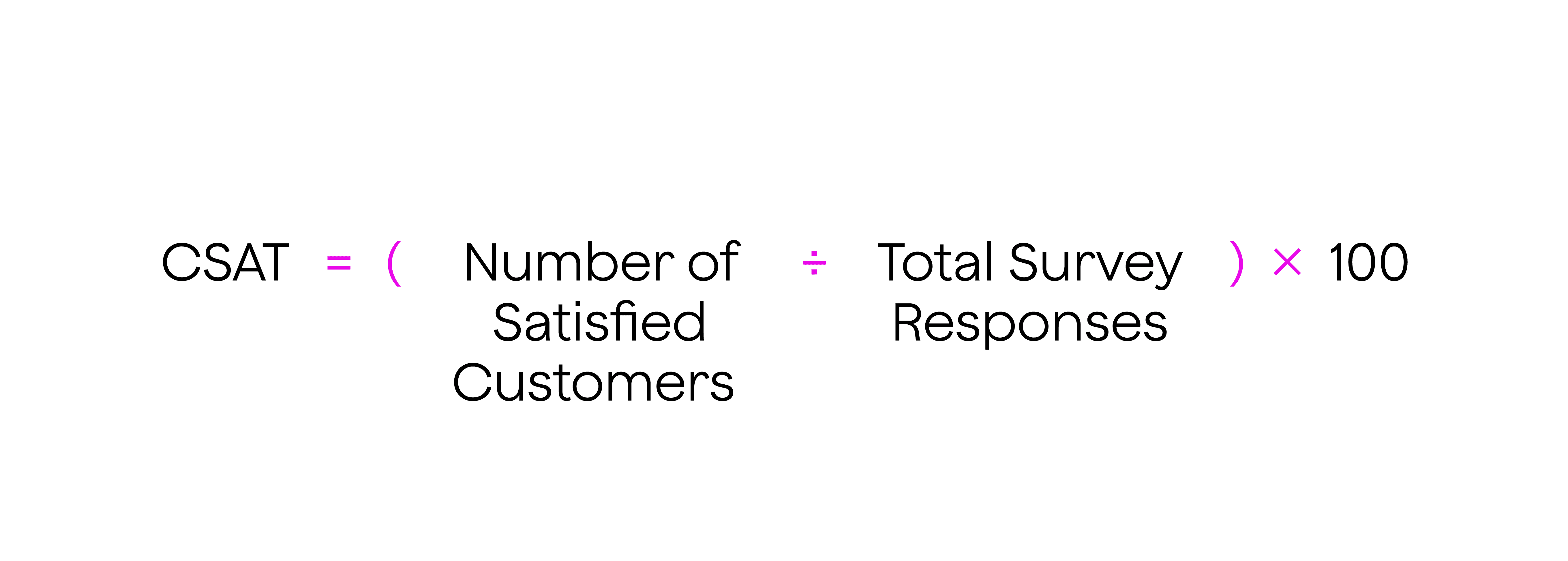
Formula: Customer Satisfaction Score (CSAT) = (Number of Satisfied Responses ÷ Total Responses) × 100
Assessing Net Promoter Score (NPS)
Net Promoter Score reflects customers’ willingness to recommend a brand, directly linking to behaviors like writing reviews or sharing recommendations on third-party platforms. In practice, NPS signals emotional connection and trust, two outcomes of effective customer engagement. However, it reduces complex customer relationships into a single number.
Customers may promote a product while disengaging from brand communication, which is why NPS should be read as an emotional indicator, not a complete engagement measure. According to Harvard Business Review, companies with higher Net Promoter Scores tend to grow faster than their competitors, making NPS a useful indicator of engagement when interpreted alongside behavioral metrics.
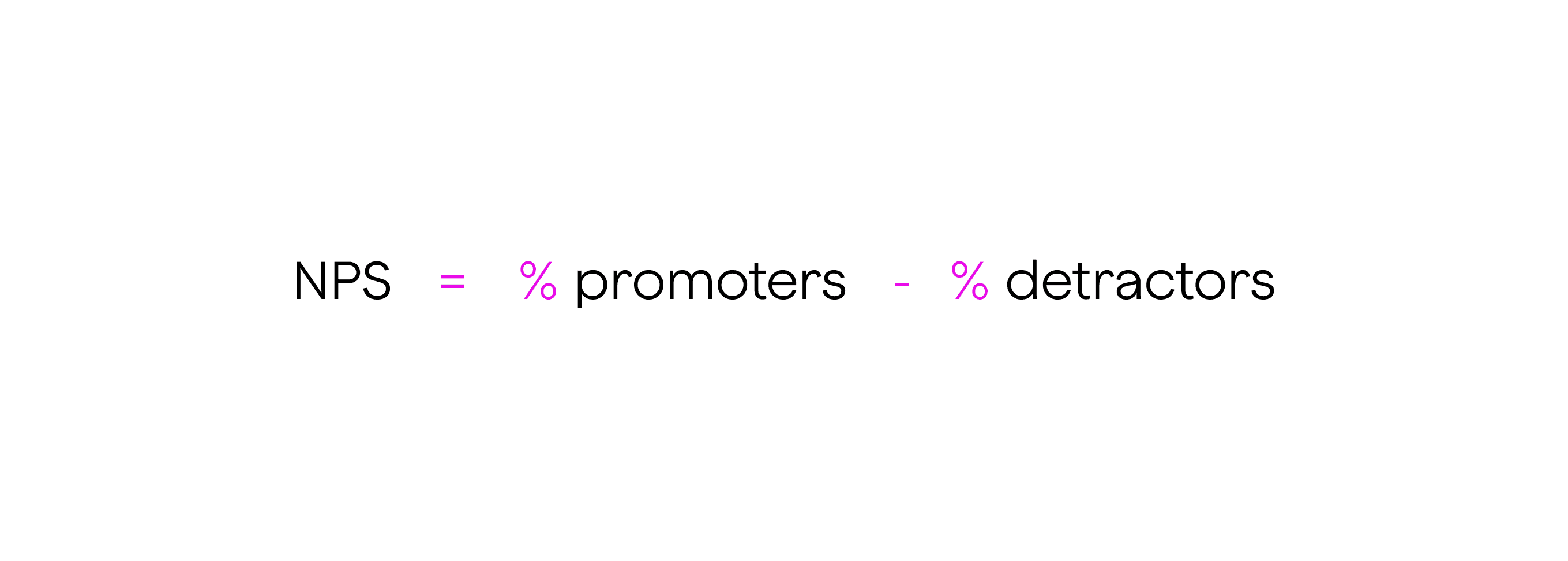
Formula: Net Promoter Score (NPS) = % Promoters − % Detractors
Monitoring Referral Rate
Referral rate measures how often customers actively bring others into the brand ecosystem. This behavior typically reflects strong brand experience, community involvement, or shared values. In practice, referrals often come from a smaller group of highly engaged existing customers, making this metric powerful but not broadly representative. Brands should avoid overgeneralizing referral behavior across the entire customer base.
Formula: Referral Rate = (Number of Customers Who Referred ÷ Total Customers) × 100
Monitoring Product or Service Usage
Product or service usage shows how customers engage with offerings in real time. Frequent usage often reflects habit formation, perceived value, and alignment with customer needs. This metric connects directly to behaviors like shorter purchase cycles and higher lifetime value. However, high usage without positive feedback can signal dependency rather than loyalty, making qualitative insights essential for proper interpretation.
Formula: Product or Service Usage Rate = (Active Users ÷ Total Users) × 100
3 Types of Customer Engagement Models
Customer engagement models can be categorized into high-touch, low-touch, and no-touch approaches, each tailored to different customer needs and interaction levels.
High-Touch Customer Engagement Model
The high-touch model involves frequent, personalized, and hands-on interactions with customers. It is typically used for high-value clients or complex products and services where building strong relationships is essential. This model prioritizes one-on-one communication, often through dedicated account managers, personalized consultations, or in-depth onboarding sessions. Businesses using this model aim to create trust and loyalty by addressing specific customer needs and offering tailored solutions.
Low-Touch Customer Engagement Model
The low-touch model strikes a balance between personalization and scalability, relying on technology to facilitate engagement. It’s commonly used in subscription-based services, e-commerce, or SaaS products where customer needs are moderately complex, and a fully personalized approach is not feasible.
No-Touch Customer Engagement Model
The no-touch model is fully automated, relying on digital channels and self-service tools to engage customers. It is best suited for businesses with a large customer base and simpler products or services that don’t require extensive support. E-commerce platforms and streaming services often use this model to provide seamless, scalable engagement without human intervention.
How to Build a Customer Engagement Strategy
A customer engagement strategy should not be built around tools or channels, but around how customers actually behave, what they value, and how they want to interact over time. The most effective strategies focus on relevance, consistency, and long-term relationships rather than short-term activity spikes.
Identifying Your Ideal Customers
Building effective customer engagement starts with clarity about who you are engaging. Ideal customers should be identified based on behavior, needs, and long-term value, not just demographics. Customers, based on usage patterns, engagement levels, or motivations, respond more positively to personalized experiences. The risk lies in over-segmentation. When segments become too narrow, engagement efforts become complex and difficult to scale. The goal is to understand customers deeply enough to be relevant without creating unnecessary friction.
Creating Targeted Content
Targeted content plays a key role in guiding customers across their journeys and supporting real-time engagement. Educational resources, product updates, and value-driven messaging help customers feel supported rather than sold to. However, targeting can quickly become intrusive if personalization feels excessive or poorly timed. Effective customer engagement strategies prioritize usefulness and clarity, ensuring content answers real customer questions instead of simply driving clicks.
Developing a Customer-Centric Approach
A customer-centric approach aligns teams, processes, and decisions around customer needs and expectations. This means designing experiences that reduce friction, improve customer service, and support long-term relationships. The challenge is that “customer-centric” often becomes a slogan rather than a practice. Without clear ownership and leadership support, teams may default to internal priorities. True customer centricity requires consistent decision-making that favors customer value over short-term efficiency.
Using the Right Customer Engagement Tools
Customer engagement tools help scale interactions across channels like email, social media, and in-app messaging. When chosen carefully, they enable personalization, automation, and real-time responsiveness. The downside is tool overload. Too many disconnected platforms fragment the customer journey and weaken the brand experience. Tools should support strategy, not define it. Integration, usability, and data quality matter more than feature volume.
Gathering and Acting on Customer Feedback
Customer feedback is essential for refining engagement strategies and improving products or services. Surveys, reviews, and direct input help brands understand evolving customer expectations. However, feedback only builds trust when it leads to visible action. Customers disengage when they repeatedly share opinions without seeing change. Closing the feedback loop by communicating outcomes is critical for maintaining strong connections with customers and reinforcing long-term engagement.
5 Brands That Are Doing Customer Engagement Well
BeReal
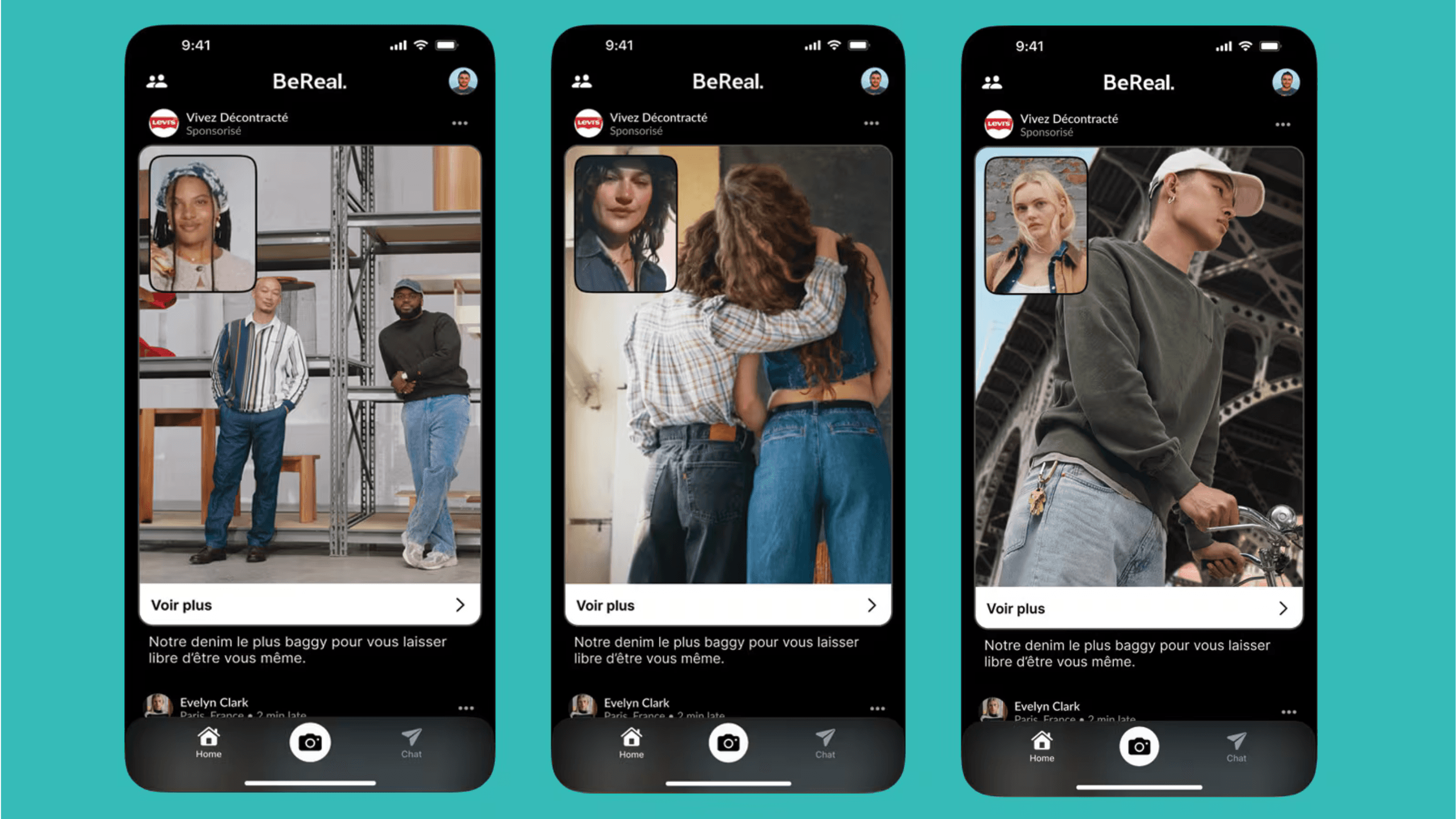
BeReal has redefined customer engagement by rejecting polished, performative social media norms. Its once-a-day notification encourages users to share authentic moments in real time, creating a sense of shared experience and emotional connection.
Customers feel part of a community rather than an audience. This simplicity strengthens engagement without overwhelming users. However, BeReal’s model relies heavily on novelty and restraint. Limited features reduce fatigue, but they also make long-term retention challenging as users seek variety or deeper functionality.

Too Good To Go
Too Good To Go engages customers by aligning daily actions with a clear social mission: reducing food waste. The app turns purchases into purpose-driven behavior, emotionally connecting customers to impact beyond the product itself.
This strengthens loyalty and repeat usage among existing customers. The challenge lies in consistency. Customer experiences depend heavily on partner businesses, and when expectations are not met, engagement can quickly decline. Purpose-driven engagement only works when execution is reliable.

Duolingo
Duolingo excels at using gamification to drive effective customer engagement. Streaks, rewards, and playful notifications encourage regular usage and habit formation. Personalized experiences adapt learning paths to individual progress, keeping customers engaged over time. However, Duolingo’s engagement tactics can feel intense.
Constant reminders and pressure to maintain streaks may motivate some users while pushing others away. This highlights a key engagement trade-off: what drives consistency for one segment can create fatigue for another.

Strava
Strava builds engagement through community and shared performance. Social features, challenges, and peer comparison encourage customers to stay active and connected. This strengthens long-term engagement by making fitness a shared experience rather than a solo activity.
At the same time, Strava’s competitive elements can discourage less active users or beginners. Engagement driven by comparison must be balanced carefully to ensure inclusivity across different customer journeys.
Headspace
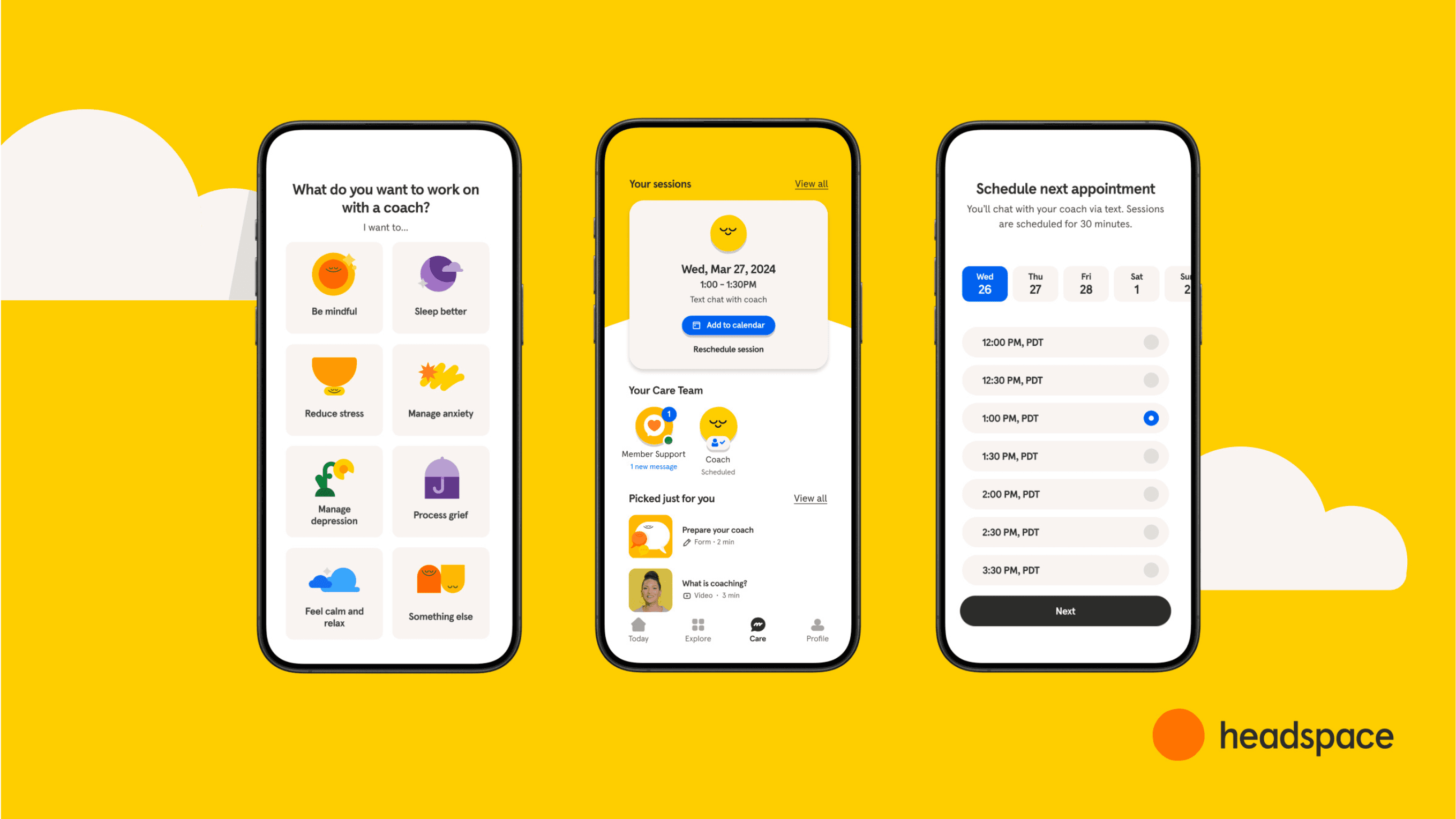
Headspace approaches customer engagement through emotional support and consistency rather than stimulation. Its calm design, guided content, and supportive tone help customers feel safe and understood. This creates trust and supports long-term customer relationships.
The challenge for Headspace is sustaining engagement once initial motivation fades. Without strong habit formation or community elements, some users disengage over time despite positive customer experiences.
Conclusion
Customer engagement is not about maximizing interactions, but about creating meaningful, consistent connections with customers over time. Effective customer engagement strategies balance personalization with restraint, data with empathy, and short-term results with long-term value. Brands that succeed understand that engagement is earned through relevance, trust, and reliable customer experiences, not forced through constant messaging or incentives.
When customer engagement aligns with real customer behavior and expectations, it strengthens relationships, supports loyalty, and drives sustainable growth. The challenge for modern businesses is not whether to engage customers, but how to do so in a way that remains valuable, human, and sustainable as customer needs evolve.